The Toxicity Matrix: Human Health Impacts of Synthetic Polymers and Bioplastics
The modern construction industry is increasingly focusing on building airtightness to meet strict energy efficiency standards (such as Passivhaus concepts). However, as structures restrict airflow with the exterior environment, Indoor Air Quality (IAQ) has emerged as the most critical issue in building biology.
To protect human health during material specification, we must move beyond thermodynamic performance and ask a fundamental biochemical question: In a building material, is the primary threat to human health the base polymer itself, or the chemical additives used to make that polymer processable?
1. The Impact of the Base Polymer: Physical Degradation and Microplastic Load
Base polymers (such as pure polyethylene or polyvinyl chloride resin) are biologically considered largely “inert” due to their massive molecular weights. This means they cannot directly pass through human skin or cell membranes.
- Health Impact (Cellular Inflammation): Although the core structure of the polymer is not chemically active, over time, mechanical wear, temperature fluctuations, and UV radiation break it down into microscopic sizes (microplastics and nanoplastics). When these particles mix with indoor dust and are inhaled, they can reach the alveoli. The human immune system (macrophages) is not programmed to break down and eliminate these synthetic foreign substances. The accumulation of these particles in tissues can lead to chronic cellular inflammation and long-term tissue stress.
2. The Impact of Additives: Chemical Migration and Endocrine Disruptors
A polymer is rarely used in its pure form to achieve the necessary mechanical properties on-site. To meet industry standards (fire resistance, flexibility, UV durability), a wide variety of chemical substances are injected into the polymer matrix.
Additives do not form permanent chemical bonds with the main polymer chain. They just float inside the matrix.
Due to heat or friction, unbound chemicals migrate to the surface. VOCs evaporate, while SVOCs cling to indoor dust.
Once inhaled or ingested, these chemicals mimic or block human hormones, causing severe cellular disruption.
The Hidden Danger of SVOCs (Semi-Volatile Organic Compounds): It is crucial to understand that plasticizers (like phthalates) and brominated flame retardants (like PBDEs) are technically not just VOCs, but SVOCs. While VOCs evaporate quickly at room temperature, SVOCs evaporate very slowly and settle directly into house dust. Humans are primarily exposed to these toxic chemicals not just by breathing the air, but by ingesting or absorbing these contaminated dust particles through the skin over time.
The Additive Toxicity Matrix
The table below breaks down the most common hidden additives in architectural polymers and their scientifically documented health risks:
| Additive Class | Primary Architectural Use | Migration Risk (VOC/SVOC) | Documented Health Impact |
|---|---|---|---|
| Phthalates (Plasticizers) | PVC flexible flooring, cable sheathing, wall coverings. | High SVOC Risk | Endocrine disruption, reproductive toxicity, developmental issues in children (ADHD). |
| Flame Retardants (PBDEs, HBCD) | EPS/XPS insulation boards, polyurethane spray foams, acoustic panels. | High SVOC Risk | Thyroid disruption, neurological damage, suspected carcinogens (Forever Chemicals). |
| Bisphenol A & S (Hardeners) | Epoxy resins, polycarbonate glazing, heavy-duty adhesives. | Medium Risk | Hormone mimics (estrogen), linked to breast and prostate cancers. |
| PFAS (Water/Stain Repellents) | Exterior membranes, roofing underlayments, textile coatings. | Medium Risk | Immune system suppression, liver damage, does not degrade in nature. |
| Natural Binders (Lignin/PHA) | Hempcrete, wood wool panels, mycelium composites. | Zero Risk | 100% Biocompatible. No off-gassing. Safe for indoor air quality. |
3. Conscious Material Selection in Bioplastics: PLA and Additive Dynamics
To reduce the environmental impact of synthetic petrochemicals, the industry has turned to bioplastics like PLA (Polylactic Acid). However, the additive rule mentioned above applies here as well.
- PLA and Performance Additives: Pure PLA is quite rigid and brittle in its natural state. To use it in an architectural application (e.g., as a membrane or flexible binder), it must be plasticized. Selecting non-toxic, bio-based plasticizers instead of synthetic ones is a crucial engineering decision to maintain the material’s health profile and prevent SVOC off-gassing.
- Thermal Degradation vs. Hydrolysis: PLA generally requires temperatures of 55-60°C (industrial composting conditions) to degrade enzymatically. Human body temperature (37°C) is not within this optimal range for rapid enzymatic degradation, relying instead on extremely slow hydrolysis (reacting with water to break down into lactic acid). Because this hydrolysis process can take years, macrophages (immune cells) continuously attack the particle during this time, creating chronic inflammation. Therefore, a PLA particulate acts much like a traditional polymer within the human cellular environment.
4. The Concept of Biocompatibility and PHA
The highest safety standard for a material concerning human health is not only its ability to degrade in nature but also its non-toxic response upon contact with human tissue (biocompatibility), its independence from synthetic additives, and its ability to be metabolized. Here, PHA (Polyhydroxyalkanoates) presents a significant engineering distinction.
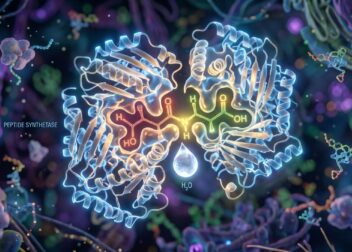
PHA is a natural polyester synthesized by bacteria. The human body has natural enzyme pathways that can recognize and break down this molecule.
It is already used in medicine for dissolving surgical sutures. When broken down, it turns into monomers familiar to cellular metabolism and is safely excreted.
Conclusion: Health Optimization in Material Specifications
In architectural designs and material specifications, Indoor Air Quality (IAQ) and Biocompatibility must be primary metrics alongside energy efficiency and Embodied Carbon.
Verifiable scientific data shows that the main chemical risk to human health stems not from the polymer itself, but from the volatile and semi-volatile additives (phthalates, PFAS, PBDEs) introduced into the matrix without forming covalent bonds. Simply having a “Bio” label does not make a product innocent. The healthy buildings of the future will not be spaces sealed airtight with synthetic chemicals; they will be constructed with breathable, additive-free materials that release zero VOCs/SVOCs and are biochemically recognized and metabolizable by both the planet and the human body.