
The Biological Cost of Petrochemicals: Cellular Interaction of Fossil Carbon
The widespread use of petroleum-derived synthetic polymers (PVC, Polyurethane, Epoxy) in the modern construction industry is largely driven by decades of habit, established supply chains, and immediate thermodynamic performance. These materials are routinely specified to insulate buildings, coat surfaces, and make interiors airtight simply because they are familiar and accessible.
However, integrating these fossil-based materials into our tightly sealed living spaces introduces a hidden biological cost. While they may perform well mechanically, they create a profoundly disruptive cellular interaction within the human body. Raising awareness about this biochemical reality is a critical step for modern construction. Just because a material is an industry standard does not mean it is Biocompatible with our biosphere and human cells.
1. Timeline Disconnect: Exile from the Biosphere’s Active Cycle
To understand the cellular impact of petroleum, we must examine the timeline of biological evolution. The massive carbon mass that forms petroleum was buried deep underground millions of years ago by tectonic movements and extreme pressure. This event signifies that this specific carbon was permanently isolated from the Earth’s active carbon cycle.
The core issue is this: Modern cellular life, mammals, and our immune systems evolved while this concentrated carbon was buried—in other words, while it was “absent” from the surface environment. The human body and modern microorganisms have developed highly efficient enzymes to recognize and digest fresh carbon forms found on the surface (sugars, proteins, cellulose). However, we possess absolutely no evolutionary lock-and-key mechanisms (enzymes) to recognize petroleum hydrocarbons, which have undergone molecular mutation, becoming heavy and complex over millions of years underground. To our biology, they are foreign molecules from an ancient era whose codes cannot be deciphered.
2. Cellular Penetration: The Lipophilic Mechanism
To impart chemical processability to petroleum-based synthetic polymers, heavy rings such as Benzene, Toluene, Xylene (BTX), and especially PAHs (Polycyclic Aromatic Hydrocarbons) are introduced during manufacturing. When these synthetic additives migrate from construction materials into indoor air and house dust in the form of SVOCs (Semi-Volatile Organic Compounds), they pose a significant risk to human biology. The fundamental physical law driving this impact is that these compounds are Lipophilic (Fat-Loving).
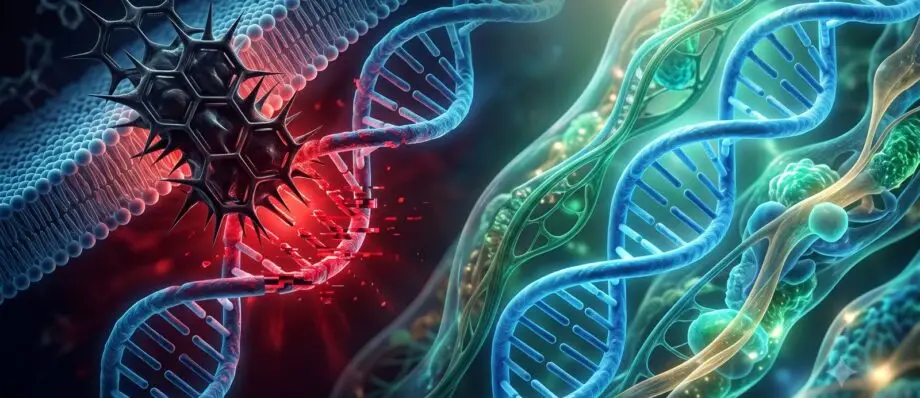
The membrane of human cells consists of a fatty barrier known as the Phospholipid Bilayer. While water-based (hydrophilic) substances cannot easily enter the cell, petrochemical aromatic rings have a high affinity for lipids. Consequently, when synthetic polymer particles or gases contact our skin or respiratory tract, they dissolve directly into the lipid layer of our cell membrane with minimal resistance and penetrate the nucleus.
1. Membrane Permeation
Synthetic SVOCs in house dust utilize their lipophilic (fat-loving) nature to dissolve into and bypass the protective cellular lipid bilayer.
2. Nucleus Entry
Passing through the cytoplasm, heavy aromatic rings (e.g., Benzene) reach the nucleus, the genetic command center of the cell.
3. DNA Intercalation
Chemicals physically wedge themselves between the base pairs in the DNA helix. This genetic disruption can lead to mutation and endocrine breakdown.
3. Enzymatic Inability and DNA Disruption
Once inside the cell, these heavy fossil molecules cannot be broken down by macrophages (the immune system’s waste disposal units) because the body lacks a suitable digestive enzyme for them. These molecules, particularly PAH derivatives, remain free inside the cell, are highly chemically reactive, and directly interact with the DNA strand.
Petrochemical rings physically wedge themselves by sliding between the base pairs in the DNA double helix. In medical terms, this mechanism is called Intercalation. When DNA attempts to replicate or transcribe itself, it makes reading errors due to this wedged petrochemical debris. This accumulation of genetic errors manifests systemically as cellular inflammation, genetic mutation, reproductive system disorders (Endocrine Disruptors), and ultimately oncogenesis.
Modern Biology vs. Ancient Carbon (Petrochemicals)
| Metric | Biocompatible Macromolecules (PHA, Lignin) | Ancient Carbon / Petrochemicals (PVC, Epoxy) |
|---|---|---|
| Timeline | Part of the active carbon cycle; co-evolved synchronously with modern biology. | Ancient and isolated carbon, disconnected from the active cycle millions of years ago. |
| Cellular Interaction | Hydrophilic or structurally recognizable by the body. Does not pierce the membrane; harmlessly digested by enzymes. | Lipophilic (Fat-loving). Permeates the phospholipid cell membrane; cannot be broken down by macrophages. |
| Genetic Response | Metabolized at the cellular level safely as a food, energy source, or natural building block. | Wedges into the DNA helix (intercalation), contributing to cellular mutation and endocrine disruption. |
Returning Architecture to the Biosphere’s Active Cycle
It is not sufficient for a material to merely meet structural or thermal requirements; it must be able to biochemically communicate with the enzymes and cell structures of our current era. Continuing to seal our walls and floors with ancient fossil carbon out of sheer industry habit means placing a biologically incompatible substance at the center of our living spaces.
True engineering and health optimization begin with Biocompatibility. The revolutionary power of materials like PHA and Lignin stems from belonging to the “active carbon cycle” of the biosphere and the human body. These materials do not pierce the cell membrane or interfere with DNA; when their structural lifespan ends, they are quietly and safely metabolized by familiar, harmless enzymes. We are not just optimizing old paradigms; we are actively returning architectural design to the biosphere’s cycle.