PHA vs. PLA: Why Marine Biodegradable Packaging is Dominating 2026
Welcome back to the Biolisty blog! If you are a packaging engineer, a sustainability director, or just a brand owner trying to navigate the wild world of eco-friendly materials, you’ve probably noticed a massive shift happening this year.
For the last decade, PLA (Polylactic Acid) was the undisputed king of bioplastics. It was the material behind almost every compostable coffee cup and eco-friendly salad bowl. But recently, search volumes for a different acronym are going through the roof. Buyers are frantically searching for PHA (Polyhydroxyalkanoates).
Why the sudden obsession? Because the packaging industry is finally waking up to the “End-of-Life” reality. Let’s dive into the technical details of how PHA is made, what petroleum plastics it can replace, and why you need to consider it for your next product launch.
The PLA Problem: The “Industrial Compost” Catch
Before we praise PHA, we need to talk about PLA. PLA is a fantastic material—it is made from renewable resources like corn starch, and it has a relatively low carbon footprint during production.
However, PLA has a major Achilles’ heel: It requires an industrial composting facility to biodegrade. To break down, PLA needs a highly controlled environment with temperatures consistently above 60°C and specific humidity levels. If a PLA cup ends up in the ocean or a cold, dark landfill, it acts almost exactly like conventional petroleum plastic. It can sit there for decades.
With global industrial composting infrastructure still lagging behind, B2B buyers are realizing that a product isn’t truly sustainable if there is nowhere to properly dispose of it.
How is PHA Actually Made? (The Microbial Factory)
Unlike traditional plastics made from refining fossil fuels, or even PLA which requires the chemical synthesis of lactic acid, PHA is literally grown by nature.
Through a process called microbial fermentation, specific strains of bacteria (such as Cupriavidus necator) are fed organic carbon sources. This feedstock can be incredibly diverse—ranging from vegetable oils and sugar cane to municipal food waste, or even captured greenhouse gases like methane!
The bacteria consume this carbon and store it inside their cell walls as an energy reserve, much like humans store fat. Engineers then harvest the bacteria and extract this pure, natural polymer (the PHA), which can be melt-processed, extruded, or injection-molded just like traditional plastic.
The Marine Biodegradable Miracle: The End-of-Life Superpower
Because PHA is created by microorganisms in nature, microorganisms in nature already know exactly how to eat it.
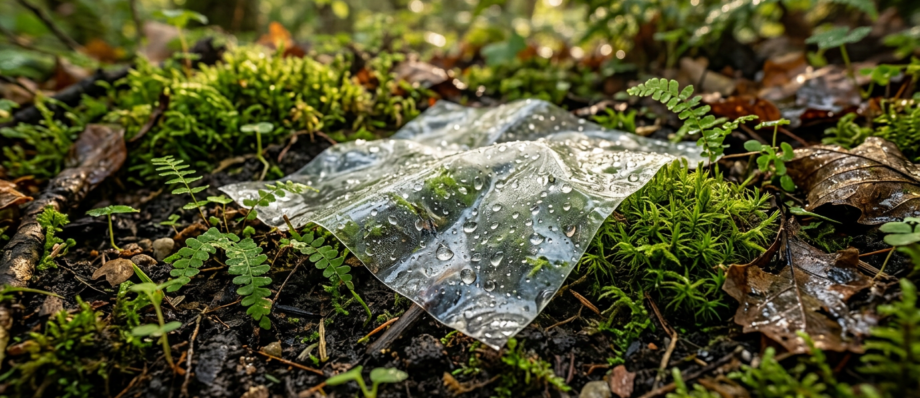
If a PHA package ends up in a home compost bin, the soil in your backyard, or—most importantly—the cold, salty environment of the ocean, it will naturally biodegrade. It doesn’t need high heat. It doesn’t leave behind toxic microplastics. It simply becomes food for bacteria, returning to carbon dioxide, water, and biomass within a matter of months.
This marine degradability is the ultimate safety net for brands terrified of their packaging ending up in the Great Pacific Garbage Patch.
What Can PHA Replace? (Applications & Alternatives)
PHA isn’t just a niche, experimental material; it is a viable, drop-in replacement for some of the world’s worst petroleum-based offenders. Depending on how it is formulated (as a homopolymer or a copolymer like PHBV), PHA can successfully mimic the properties of Polyethylene (PE), Polypropylene (PP), and Polystyrene (PS).
Here is where PHA is currently disrupting the market:
- Flexible Films and Pouches: Say goodbye to unrecyclable, multi-layer snack wrappers. PHA is perfect for potato chip bags, candy wrappers, and fresh produce films, easily replacing LDPE (Low-Density Polyethylene).
- Rigid Packaging: PHA can be injection-molded into premium cosmetic jars, bottle caps, and single-use food containers, serving as a direct alternative to PP and PS.
- Paper Coatings: That thin plastic lining that makes standard paper coffee cups unrecyclable? PHA can replace the PE coating, making the entire cup fully marine biodegradable, home compostable, and recyclable.
- Agricultural Mulch Films: Farmers can lay down PHA film over soil to retain moisture and prevent weeds. Instead of paying to pull up and dispose of dirty plastic at the end of the season, they can simply plow the PHA film into the earth, where it breaks down into natural soil nutrients.
The Technical Deep Dive: Can PHA Perform?
A material can be the greenest thing on earth, but if it doesn’t protect the product on the shelf, it’s useless.
- Barrier Properties: Historically, bioplastics struggled with moisture. However, modern PHA blends exhibit excellent Water Vapor Transmission Rates (WVTR) and oxygen barriers, making them highly suitable for extending the shelf life of food and cosmetics.
- Thermal Stability: While pure PHA can be brittle, cutting-edge suppliers are creating formulations that offer incredible heat resistance, rivaling conventional Polypropylene (PP) for hot-fill food applications.
- Printability and Sealability: PHA films are easily heat-sealable and hold natural inks beautifully, meaning you don’t have to sacrifice your brand’s aesthetic for sustainability.
The Cost and Scalability Elephant in the Room
Let’s be real—if PHA is so perfect, why isn’t it everywhere yet? Cost.
Currently, scaling the bacterial fermentation process makes PHA more expensive than PLA and significantly more expensive than virgin petroleum plastics. However, this is changing rapidly. As global regulations tighten and packaging taxes sweep across Europe and North America in 2026, the cost of using non-compliant plastics is skyrocketing. When you factor in the fines, the taxes, and the immense brand loyalty you gain from ocean-safe packaging, the ROI of PHA makes serious financial sense.
Sourcing PHA: Don’t Go It Alone
The transition from conventional plastics or PLA to PHA requires careful engineering, testing, and, most importantly, finding a supplier you can trust. The market is moving fast, and greenwashing is still a major threat.
At Biolisty, we do the heavy lifting for you. Our platform connects B2B buyers directly with vetted, certified PHA manufacturers from around the globe. We verify their marine biodegradability certifications (like TÜV Austria OK biodegradable MARINE) and review their technical data sheets so you can source with absolute confidence.