Decoding Bio-Based Barrier Coatings: How to Replace PFAS and PE in Food-Contact Paper Packaging
The transition away from single-use plastics has led the food service and packaging industries to heavily embrace paper-based alternatives. However, standard paper cannot naturally hold liquids or resist grease. To solve this, the industry has historically relied on two invisible solutions: Polyethylene (PE) laminations and PFAS (Per- and polyfluoroalkyl substances).
With global regulations tightening, transitioning to sustainable materials is no longer an optional branding strategy—it is a strict legal requirement. This guide explores the dangers of legacy coatings, the engineering behind bio-based alternatives, and how your brand can transition to compliant materials.
1. The Paper Packaging Illusion: The Dangers of PE and PFAS
To the consumer, a paper coffee cup or a cardboard takeout box looks perfectly sustainable. To a packaging engineer, it is often an unrecyclable nightmare.
- The Problem with Polyethylene (PE): Conventional petroleum-based polymers like PE are laminated onto paper to provide a liquid barrier. This plastic lining makes the paper virtually impossible to recycle in standard paper mills. Furthermore, as these items degrade in the environment, the PE lining shatters into microscopic pieces, contributing to the global microplastics crisis.
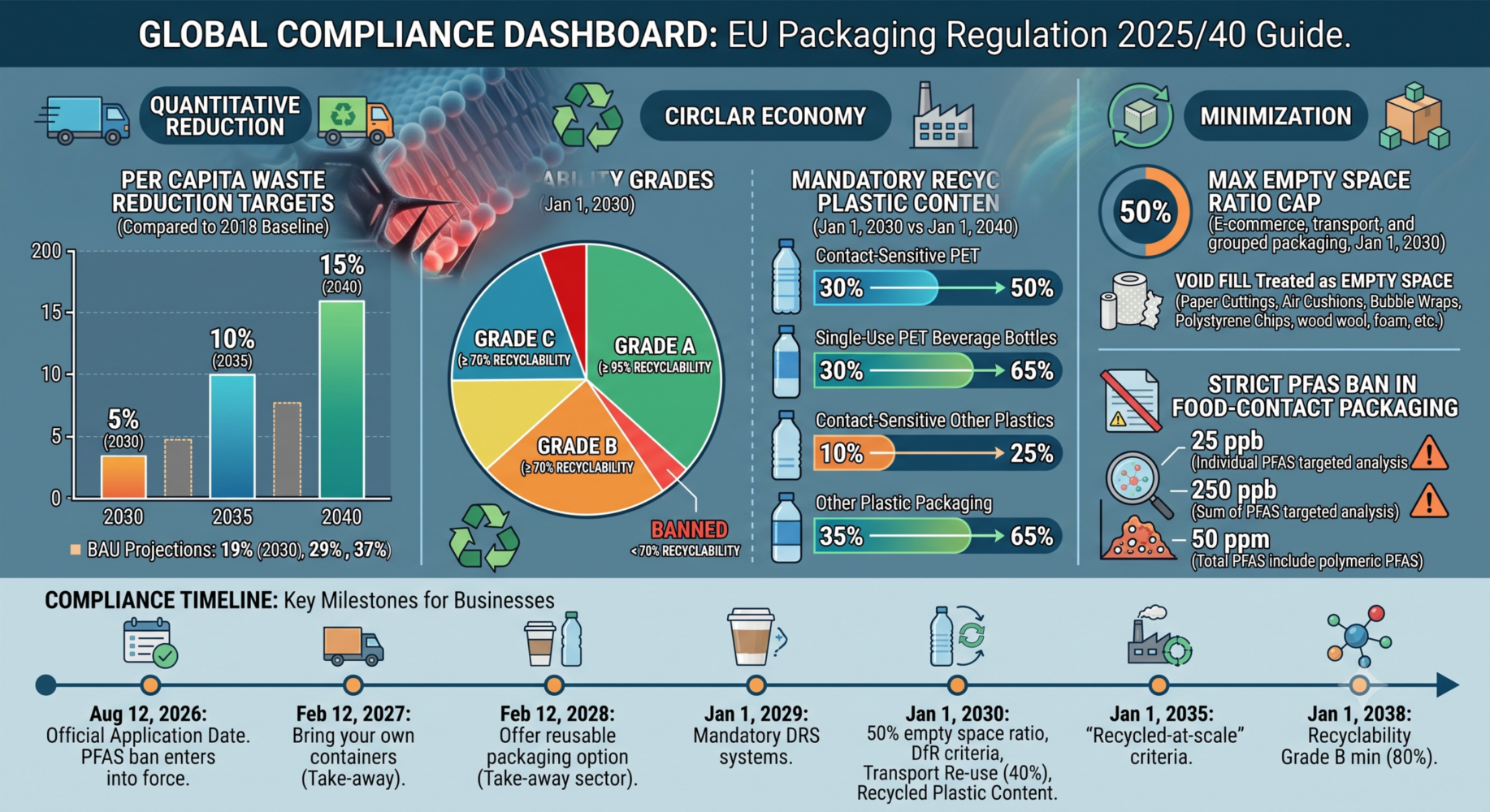
- The Threat of PFAS (“Forever Chemicals”): To prevent grease from soaking through fast-food wrappers and pizza boxes, manufacturers have heavily utilized PFAS. These “forever chemicals” do not break down in nature. They bioaccumulate in the environment and have been linked to severe human health risks, including immune system disruption and cancer. Consequently, the EU Packaging and Packaging Waste Regulation (PPWR) is explicitly banning the use of PFAS in food-contact packaging if they exceed specific technical thresholds. Manufacturers utilizing chemical coatings to provide oil and water resistance must immediately substitute them with organic, PFAS-free alternatives.
2. The Chemistry of Next-Generation Bio-Coatings
To achieve full compliance, forward-thinking enterprises are shifting toward advanced biopolymers. Modern bio-based barrier coatings rely on natural, renewable chemistry to mimic the performance of plastic:
- PHA (Polyhydroxyalkanoates): Naturally grown by bacteria through microbial fermentation, PHA is a completely marine-biodegradable and home-compostable polymer. It can completely replace the thin polyethylene (PE) liquid-barrier lining inside paper coffee cups.
- Seaweed and Algae Extracts: Sodium alginate derived from seaweed creates an excellent natural barrier against oils and fats without requiring chemical modifications.
- Plant-Based Proteins & Cellulose Nanocrystals: By engineering plant proteins or utilizing highly refined cellulose, producers can create a dense molecular structure that physically blocks water vapor and oxygen.
3. Application on Existing Machinery (Drop-In Solutions)
One of the biggest concerns for packaging manufacturers is capital expenditure (CapEx). Do you need to buy entirely new machines to apply bio-coatings? Fortunately, the answer is mostly no.
Many aqueous (water-based) bio-coatings are formulated as drop-in solutions. They can be applied using existing standard coating lines:
- Flexographic and Gravure Printing: Many low-viscosity bio-coatings can be applied directly via the printing press as an overprint varnish (OPV).
- Extrusion Coating: For materials like PHA, standard extrusion coaters can be used. Engineers simply need to adjust the melt temperatures, as biomaterials generally process at lower temperatures than conventional PE to prevent thermal degradation.
4. Crucial Performance Metrics for Engineers
When vetting a new bio-based coating, R&D teams must validate performance through standardized testing. Here are the three critical metrics to monitor:
| Test Name | What It Measures | Target Outcome for Food Packaging |
| Cobb Test (ISO 535) | Water absorptiveness of the paper. | A low Cobb value (e.g., < 10 g/m²) indicating the bio-coating successfully prevents liquid from soaking into the paper fiber. |
| KIT Test (TAPPI T 559) | Resistance to grease, oil, and solvents. | A high KIT score (typically 8 to 12) ensures the packaging will not fail when holding greasy foods like french fries or pastries. |
| WVTR / OTR | Water Vapor Transmission Rate & Oxygen Transmission Rate. | Crucial for shelf-life extension. Low transmission rates keep dry foods crispy and prevent oxidation. |
5. The Cost Factor: Economics of Transitioning
The most common barrier to adopting bio-coatings is the perceived cost. Currently, bio-based coatings and PHA laminations carry a premium over cheap, heavily subsidized petroleum-based PE and PFAS chemicals. However, procurement teams must look at the Total Cost of Ownership (TCO):
- EPR Fees and Taxes: Under new EU regulations, non-recyclable or non-compliant packaging will be subject to heavily modulated Extended Producer Responsibility (EPR) taxes. Eco-friendly packaging will incur significantly lower waste management fees.
- Brand Value and Fines: The cost of non-compliance—ranging from regulatory fines to massive reputational damage—far outweighs the incremental per-unit cost of a bio-based coating.
6. Leading Innovators Producing Bio-Based Coatings
If you are looking to source safe, compliant, and truly biodegradable barrier coatings for your paper packaging, here are some of the pioneering companies leading the global transition:
- Danimer Scientific: Creators of Nodax®, an innovative PHA-based biopolymer that serves as an excellent extrusion coating alternative to PE.🔗 www.danimerscientific.com
- Xampla: A deep-tech company manufacturing highly functional, plant-protein-based barrier coatings that act as drop-in replacements for synthetic films and PFAS.🔗 www.xampla.com
- Notpla: Known for their revolutionary seaweed-based packaging, they offer natural barrier coatings for food service cardboard that are 100% plastic-free and biodegradable.🔗 www.notpla.com
- Solenis: A global specialty chemical supplier producing a robust portfolio of TopScreen™ bio-based, PFAS-free barrier coatings for paper and board packaging.🔗 www.solenis.com