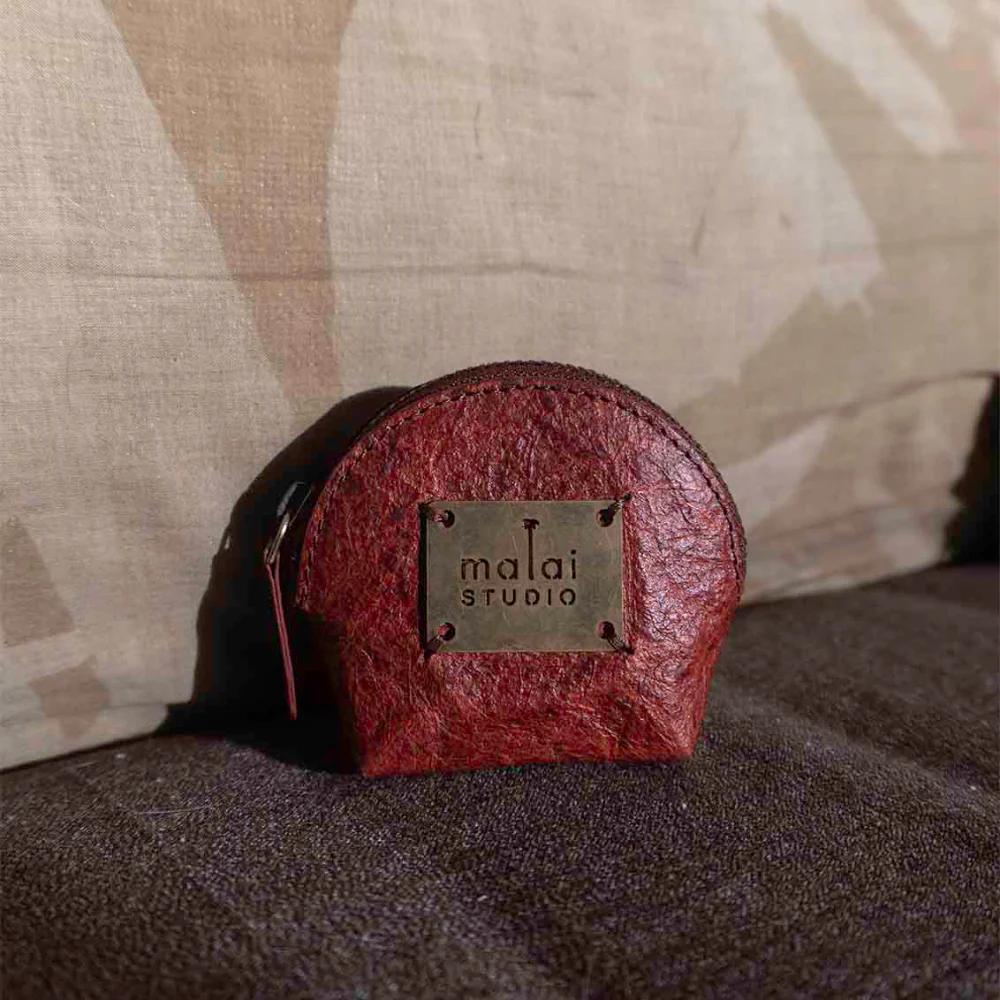
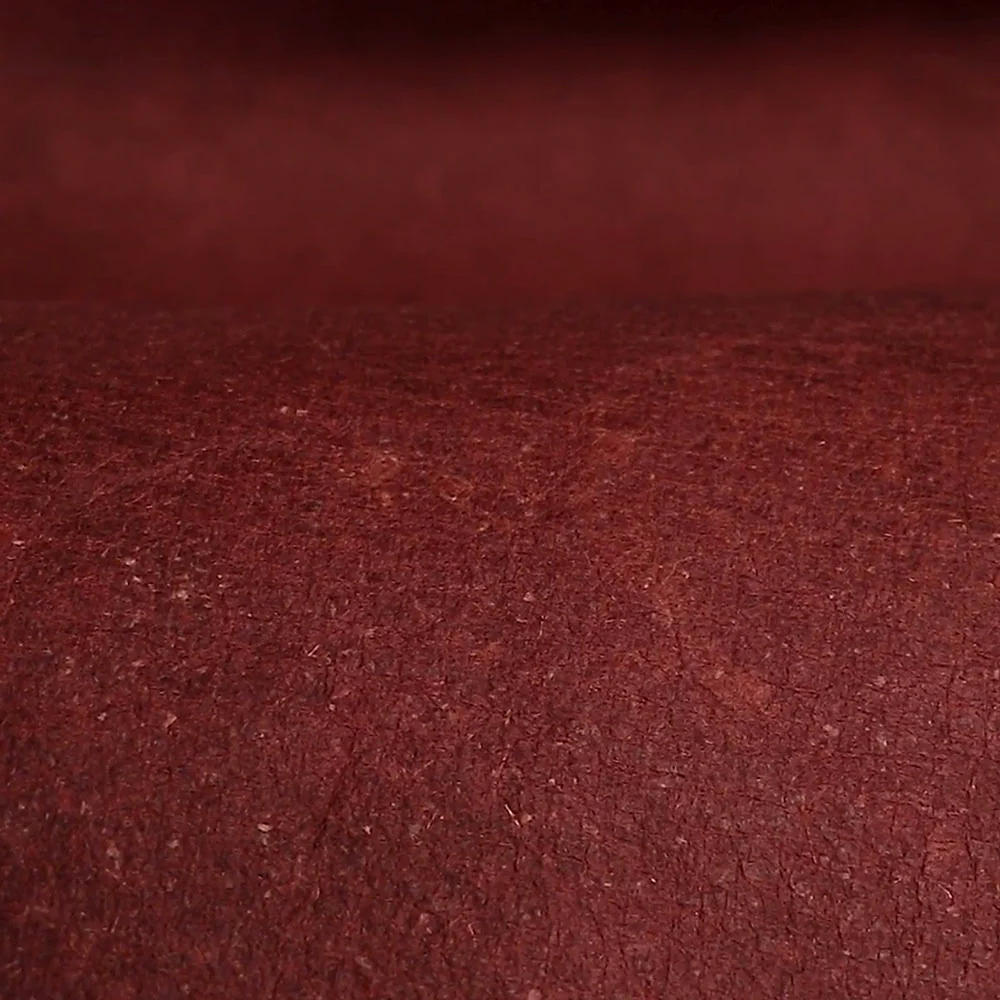
Malai – Coconut Water Bacterial Cellulose & Natural Fiber Bio-Composite
Description
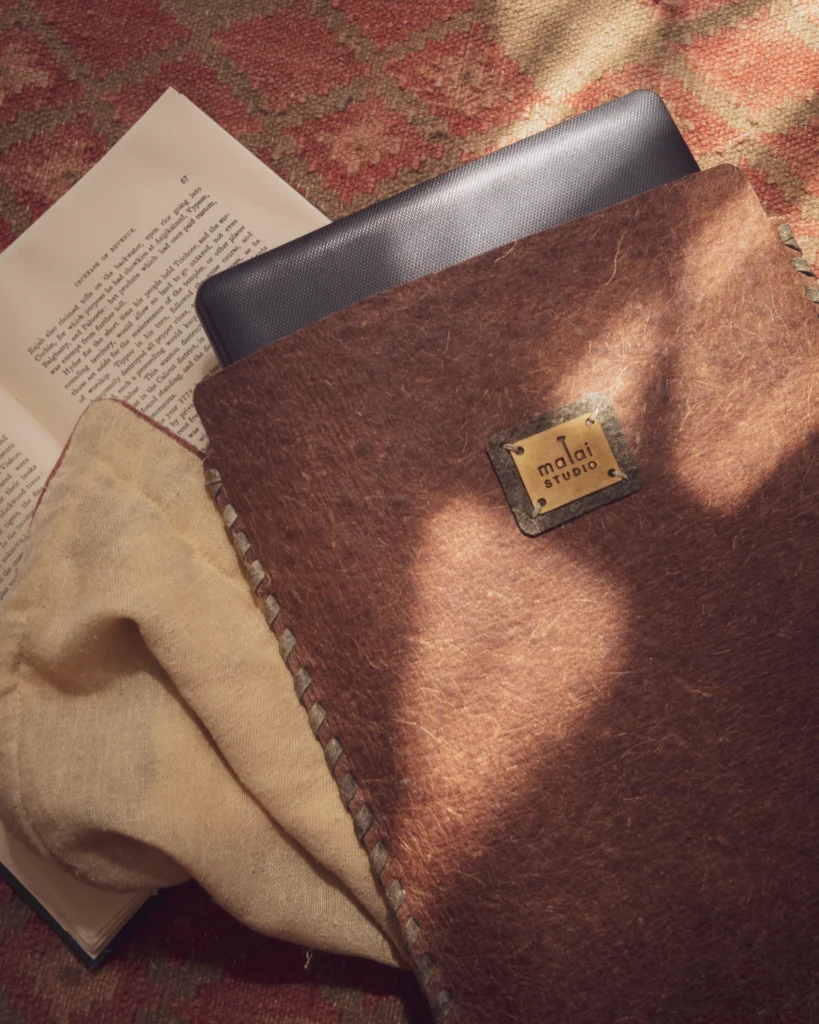
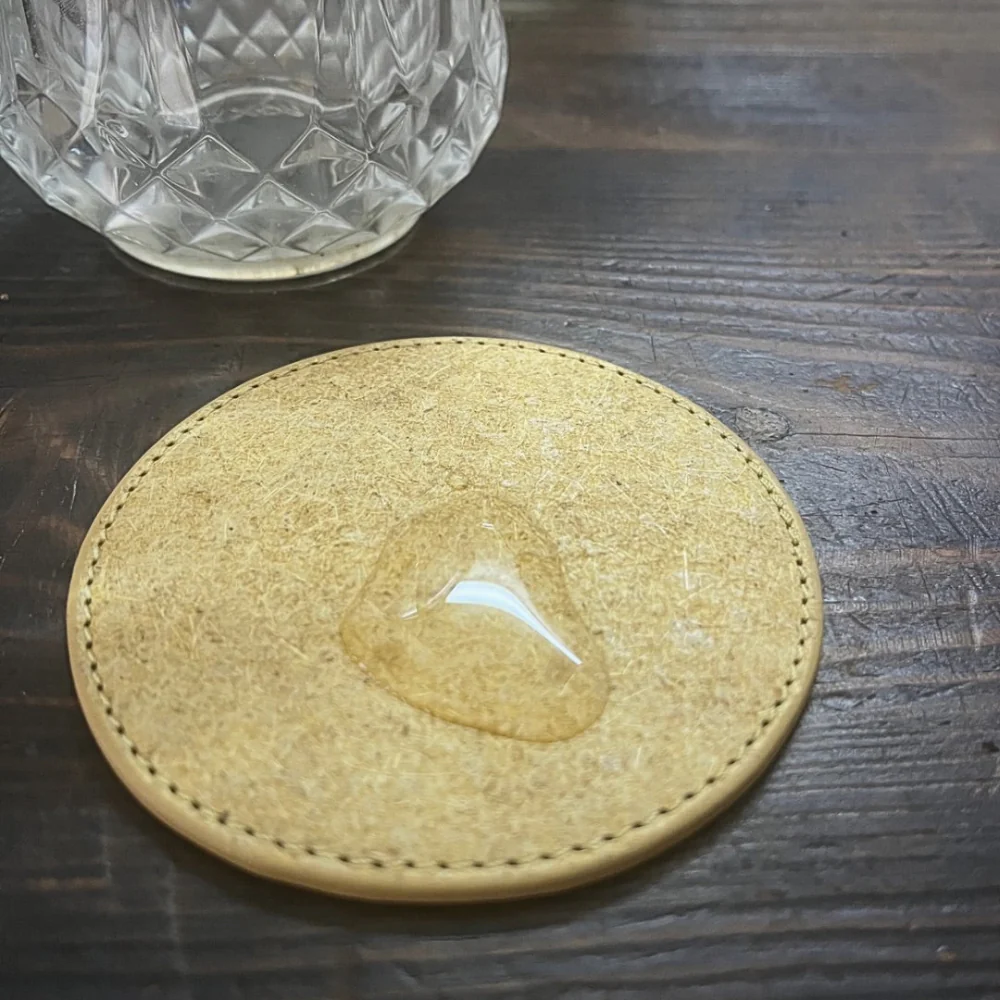
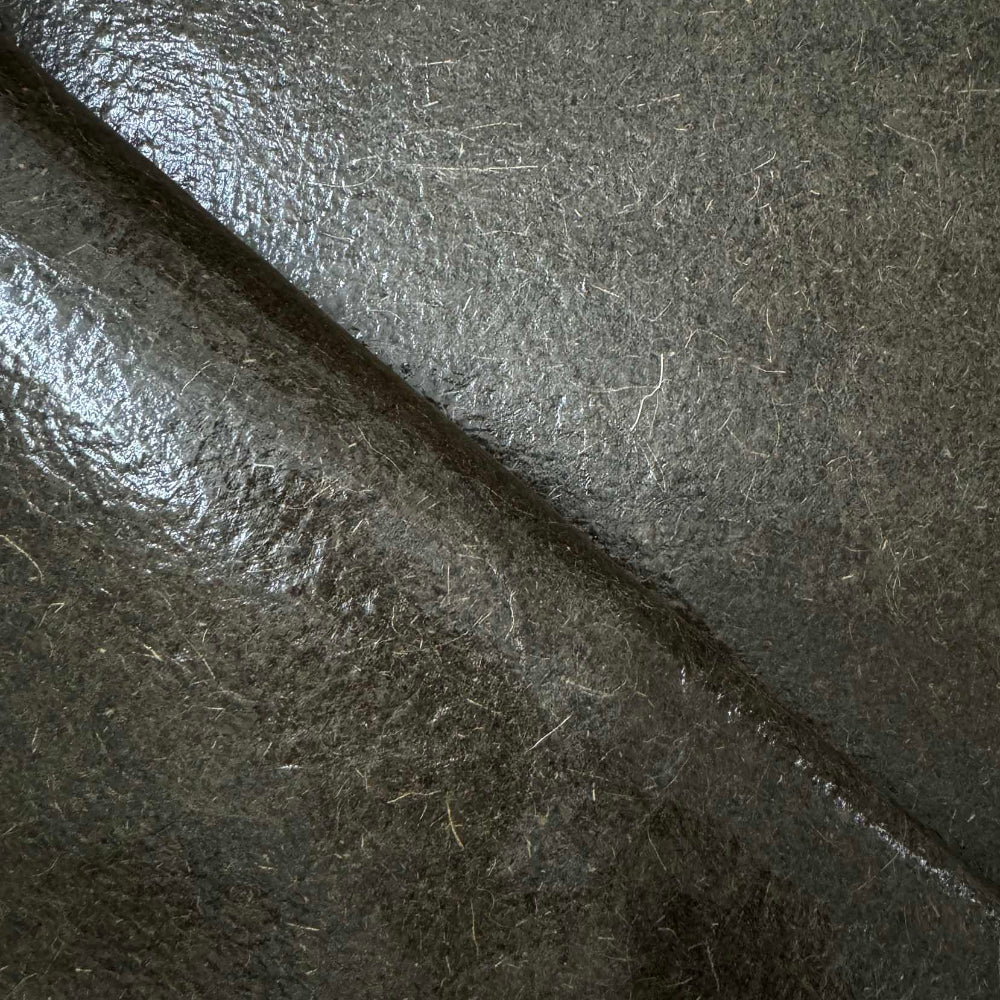
1. The Material: Malai is a highly engineered, 100% bio-based flexible composite material. The primary matrix is bacterial nanocellulose, cultivated via fermentation using specialized bacteria fed on waste coconut water. Once the cellulose is harvested, it is blended with natural lignocellulosic fibers (such as banana, hemp, and sisal) to provide structural integrity and tensile strength. Crucially, Malai rejects the industry standard of sealing bio-leathers with petrochemical Polyurethane (PU). Instead, the final sheets are treated with a proprietary mix of natural oils, waxes, and plant-based resins to achieve moisture resistance and flexibility.
2. The Company & The Story: Based in Kerala, India, Malai tackles a massive but rarely discussed industrial waste problem. Mature coconuts harvested for their meat and oil yield millions of liters of waste coconut water. When dumped directly into the soil, this nutrient-dense water causes severe soil acidification. Malai intercepts this specific agro-industrial waste stream, repurposing it as the primary nutrient broth for their bacterial fermentation facilities.
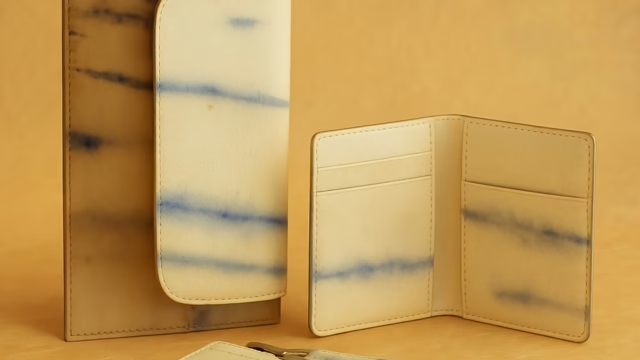
3. Technical & Commercial Summary: Commercially available in continuous rolls or specific sheet sizes, Malai serves as a direct, non-toxic alternative to animal leather and synthetic PU/PVC hides. It is targeted at B2B designers in fashion, accessories, and light upholstery. Because it relies entirely on biological processes and natural fiber blending, the material exhibits a unique organic texture. It can be molded seamlessly in its 3D stage or sewn like traditional leather in its cured 2D stage.
4. Features:
-
Zero Petrochemical Coatings (No PU/PVC): Achieves surface protection and water resistance strictly through natural waxes and oils, bypassing the microplastic shedding associated with standard “vegan leathers.”
-
Agro-Waste Valorization: Prevents soil acidification by utilizing waste coconut water from local processing plants as a fermentation feedstock.
-
Absolute Circularity: At the end of its lifecycle, the material is fully home-compostable and will naturally biodegrade without leaching hazardous synthetic chemicals.
-
Natural Dye Compatibility: Dyed exclusively using natural, plant-based colorants, eliminating toxic heavy-metal mordants from the water cycle.
-
Pricing Details: Positioned in the premium B2B eco-material segment. The pricing reflects the labor-intensive biological fermentation and natural finishing processes. For ESG-focused brands, the ROI is absolute supply-chain transparency and the ability to claim a true, microplastic-free end-of-life for their products.
Analysis & Certificates
Environmental & Bio-Technical Analysis: [Biolisty Auditor Note]: Malai succeeds exactly where 90% of the "vegan leather" industry fails: the finishing coating. By refusing to compromise their biological cellulose matrix with a topcoat of Polyurethane (PU) or Acrylic, they maintain the thermodynamic integrity of the material. It requires more maintenance (natural waxing) than a plastic-coated fake leather, but it genuinely fulfills the promise of a circular, biodegradable flexible surface.
Technical Features
Location
Claim
Is this your business?
Claim listing is the best way to manage and protect your business.
Claim Now!Contact Listings Owner

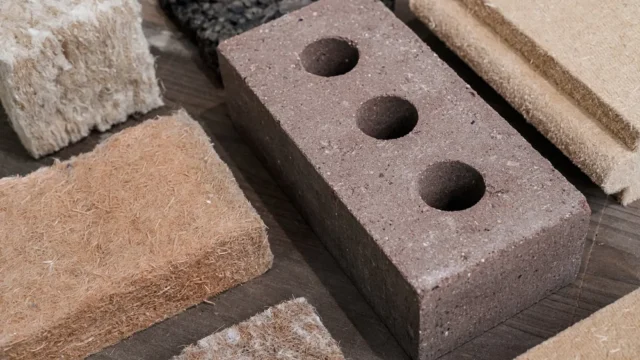
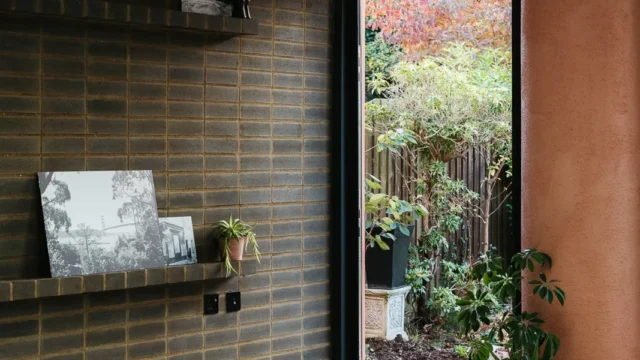
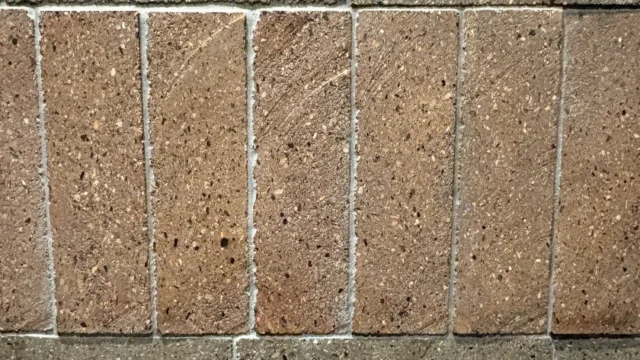
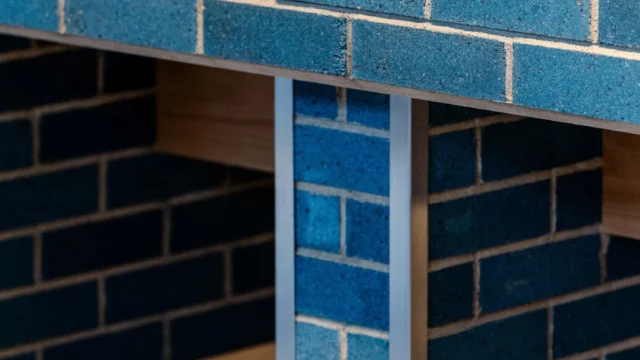
Kenoteq K-Briq® – Unfired Recycled Brick
- Edinburgh, Scotland, UK
- info@kenoteq.com
- www.kenoteq.com