The 2026 Microplastics Ban and EUPPWR: A Comprehensive B2B Compliance and Sourcing Guide
The regulatory landscape for global packaging is undergoing its most significant transformation in decades. For brands, sustainability managers, and packaging engineers exporting to or operating within the European market, transitioning to sustainable materials is no longer an optional branding strategy—it is a strict legal requirement. With the European Union and North American authorities launching coordinated crackdowns on plastic pollution, businesses must rapidly adapt to avoid severe financial penalties and supply chain disruptions.
Chief among these new legal frameworks is the European Union’s Packaging and Packaging Waste Regulation (PPWR 2025/40), which targets the entire lifecycle of packaging materials. Concurrently, new global restrictions on “intentionally added microplastics” are rendering many traditional “eco-friendly” alternatives legally non-compliant.
This comprehensive technical guide breaks down the core requirements of the EU PPWR, the hidden risks of pseudo-degradable materials, and how enterprises can secure a future-proof, compliant supply chain using genuinely biodegradable alternatives.
1. The Regulatory Tsunami: Understanding the EU PPWR (2025/40) Timeline
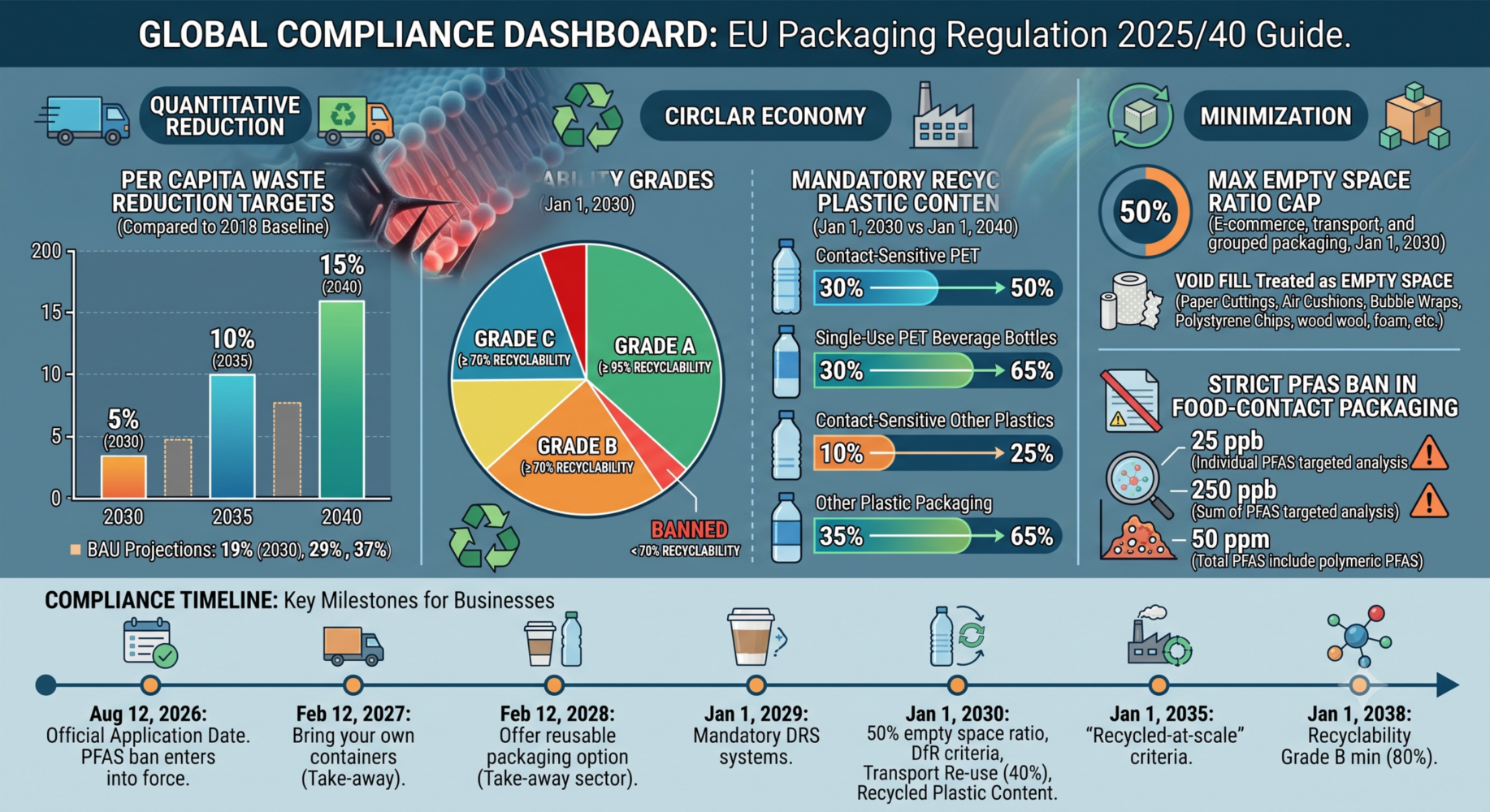
According to the official mandates detailed in the European Commission Packaging Waste Directive and Regulation, the old packaging directive (94/62/EC) is being repealed to make way for the much stricter PPWR. The timeline for this transition leaves very little room for delay:
- Entry into Force: February 11, 2025
- General Date of Application: August 12, 2026
The PPWR applies universally to all packaging placed on the EU market, regardless of the material used or its country of origin. This gives manufacturers, exporters, and procurement teams an exceptionally tight window to audit their current packaging portfolios and execute an engineering shift toward compliant structures.
2. Core Technical Yükümlülükler (Requirements) for Enterprises
Data from the European Commission reveals that 40% of plastics and 50% of marine litter in the EU consist of packaging waste. To curb these numbers, the PPWR enforces several rigid technical parameters that will apply from August 12, 2026:
A. The 2030 Recyclability Mandate
By January 1, 2030, all packaging placed on the EU market must be recyclable in an economically viable manner. This forces ambalaj engineers to simplify polymer blends, move away from inseparable multi-layer flexible plastics, and design packaging with a clear end-of-life collection and recycling pathway.
B. Restrictions on Single-Use Formats
The regulation strictly restricts specific single-use plastic packaging formats commonly found in the Hotel, Restaurant, and Cafe (HoReCa) sectors. This includes miniature packaging for individual portions (such as condiment sachets, sauces, and sugar packets) and miniature hospitality products (such as small shampoo or lotion bottles).
C. Minimizing Substances of Concern (The PFAS Ban)
The PPWR introduces severe restrictions on hazardous substances, explicitly banning the use of PFAS (Per- and polyfluoroalkyl substances), often called “forever chemicals,” in food-contact packaging if they exceed specific technical thresholds. Manufacturers utilizing chemical coatings to provide oil and water resistance must immediately substitute them with organic, PFAS-free alternatives.
D. Take-Away Reuse Obligations
Take-away and food-service businesses will be legally required to offer consumers the option to bring their own reusable containers (BYO) for food and beverages at no additional charge, actively driving down the demand for single-use containers.
3. The Hidden Threat: Microplastics and the “Oxo-Degradable” Trap
As brands rush to replace traditional polymers, they frequently fall victim to the “oxo-degradable” or “oxo-biodegradable” trap—a primary source of industrial greenwashing that is heavily targeted by the 2026 microplastics ban.
Microplastics (particles under 5mm) are highly destructive because they do not assimilate back into natural ecosystems. Instead, they accumulate in soil, marine lifecycles, and human biology. Oxo-degradable plastics are conventional petroleum-based polymers (like PE or PP) embedded with chemical additives designed to accelerate fragmentation under heat or sunlight.
While the plastic quickly shatters and becomes invisible to the naked eye, it does not safely biodegrade. It merely transforms into billions of hazardous microplastics. Consequently, oxo-degradable materials are strictly banned. Any packaging claiming to “vanish naturally” without carrying an verified third-party compostable or marine-biodegradable certification presents a massive compliance and legal risk to your enterprise.
4. Next-Generation Biomaterials: What Can PHA Replace?
To achieve full compliance with the 2026 microplastics ban and the EU PPWR, forward-thinking enterprises are shifting toward advanced biopolymers that possess true marine biodegradability and home-compostable profiles. The leading material in this revolution is PHA (Polyhydroxyalkanoates).
The Microbial Manufacturing Process
Unlike PLA (Polylactic Acid), which requires strict industrial composting facilities at temperatures exceeding 60°C to break down, PHA is naturally grown by bacteria through microbial fermentation. Bacteria are fed organic carbon sources—such as vegetable oils, agricultural waste, or even captured greenhouse gases like methane. The bacteria store this carbon inside their cells as an energy reserve (similar to how humans store fat). This pure, natural polymer is then harvested and processed.
Industrial Applications & Petroleum Alternatives
PHA can be formulated to directly mimic and replace some of the most environmentally damaging fossil-fuel plastics, including Low-Density Polyethylene (LDPE), Polypropylene (PP), and Polystyrene (PS):
- Flexible Films and Pouches: PHA serves as an excellent replacement for multi-layer snack wrappers, candy bags, and fresh produce films.
- Rigid Injection-Molded Packaging: PHA can be molded into high-quality cosmetic jars, bottle caps, and single-use food service containers.
- Barrier Paper Coatings: It can completely replace the thin polyethylene (PE) liquid-barrier lining inside paper coffee cups, rendering the entire cup fully home-compostable and marine-biodegradable.
- Agricultural Mulch Films: PHA films can be laid over soil to prevent weeds and retain moisture, then simply plowed straight into the earth at the end of the season, where they degrade into natural soil nutrients.
5. Strategic Roadmap for Manufacturers and Entrepreneurs
If your enterprise exports to the European Union or wishes to capture the rapidly growing sustainable procurement market, you must implement the following strategic steps:
- Execute a Supply Chain Audit: Contact your packaging suppliers immediately to demand full material traceability sheets, ensuring zero inclusion of PFAS or oxo-degradable additives.
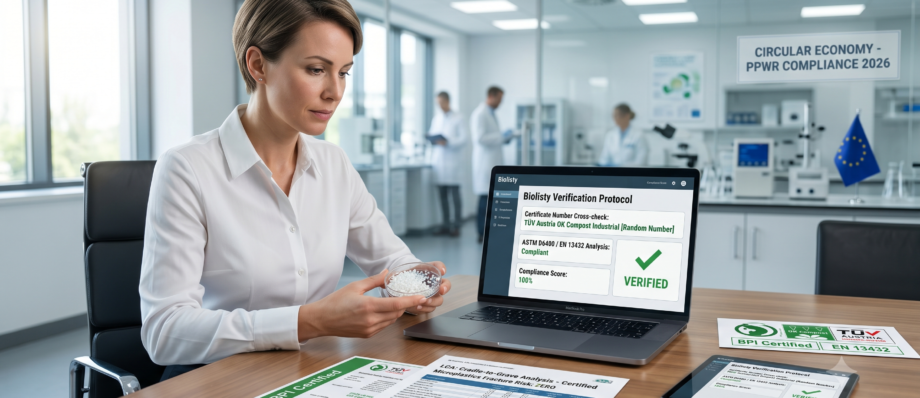
- Initiate Life Cycle Assessments (LCA): Transition away from vague sustainability marketing. Secure verified, third-party Cradle-to-Grave LCA data to measure your packaging’s actual carbon, land, and water footprints.
- Design for Material Minimization: Optimize your structural packaging designs to remove unnecessary secondary layers, shrink films, and non-recyclable structural components.